
Over 50% of saffron sold contains adulterants. Discover 7 simple and reliable tests to tell real saffron from fake: water test, visual inspection, ISO 3632 certification, and more.
Saffron is the world's most expensive spice — up to €3,500/kg for premium quality. This high price makes it the number one target for food adulteration. According to some European studies, over 50% of saffron sold at retail contains adulterants. Here's how to tell real saffron from fake, with tests accessible to everyone and professional methods.
Saffron requires 150,000 to 200,000 flowers to produce a single kilogram, all hand-picked and sorted. This extremely high production cost incentivizes unscrupulous producers to mix authentic threads with cheaper substitutes, or to dye other plant matter to mimic saffron's appearance.
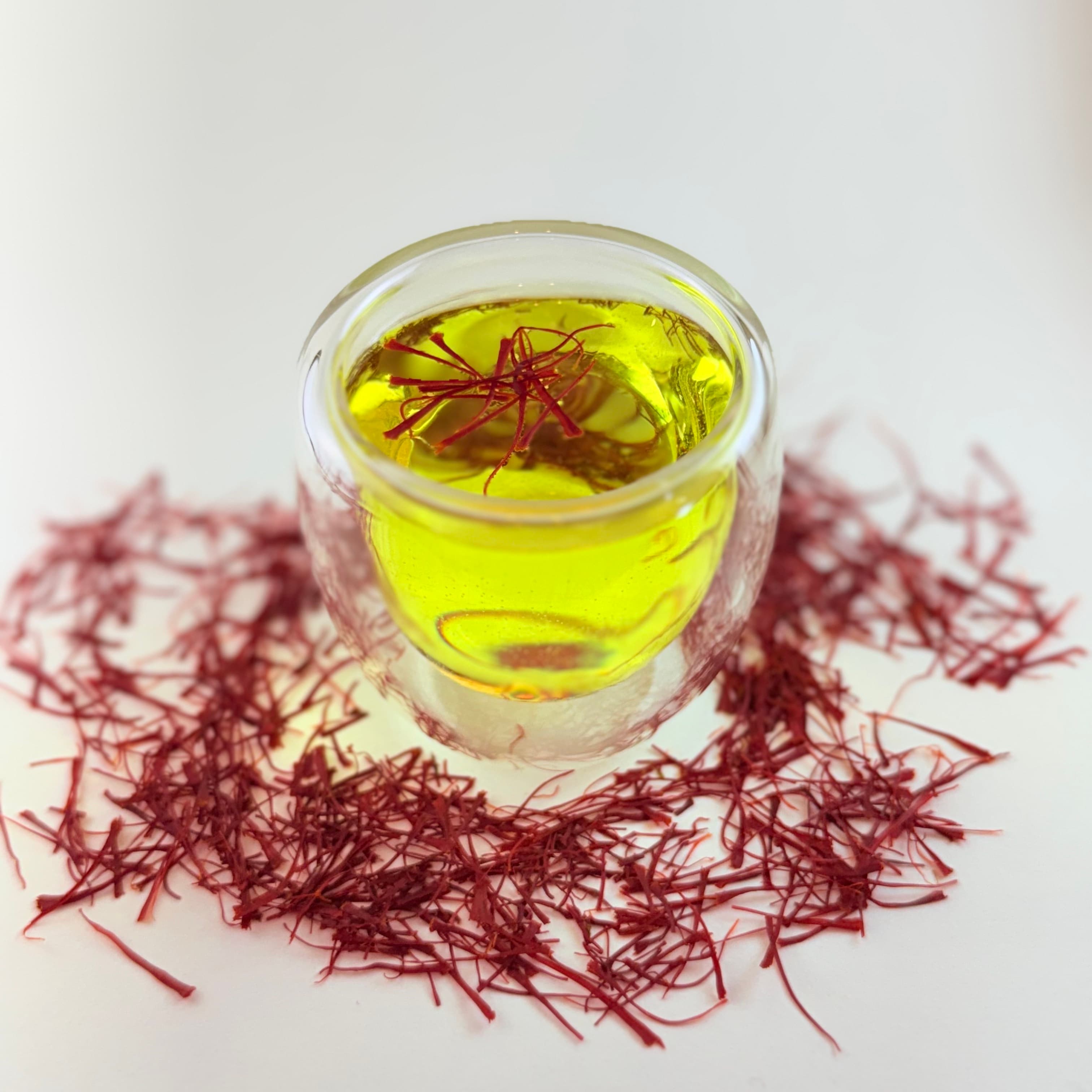
An authentic saffron thread has a trumpet or flared funnel shape at its tip (the stigma). It is deep red to burgundy, with a slight orange-yellow tint at the base (the style). Each thread is thin, dry, and slightly rigid.
Place 3 to 5 threads in a glass of cold or lukewarm water. Observe carefully:
Tip: Real Category I saffron colors water bright yellow or golden saffron. Red in the water is always a sign of falsification.
Take a dry thread and bring it close to a flame (lighter, match). Authentic saffron:
Falsified saffron containing synthetic dyes burns faster, releases a chemical smell, or leaves unusual residue.
Authentic saffron has a complex, floral, slightly metallic aroma, with notes of hay, honey, and vanilla. On the palate, it is slightly bitter — never sweet.
The compound safranal, responsible for saffron's unique aroma, cannot be faithfully replicated with artificial flavors.
Dissolve a pinch of baking soda in water, then add a few threads. With authentic saffron, the water turns golden yellow to lemon yellow. If the color turns red, brown, or stays unchanged, it's a sign of falsification or added coloring.
The ISO 3632 standard is the only internationally certified standard for saffron quality. It defines 4 categories (I to IV) based on three laboratory-measured parameters:
Category I is the highest: crocin > 200, picrocrocin > 70, safranal > 20. A serious supplier must be able to provide an analysis certificate from an accredited laboratory — not just a label.
Quality Category I saffron cannot be sold at low prices. If a seller offers saffron for less than €10–15 per gram while claiming premium quality, that's a major red flag.
Recognizing authentic saffron is within everyone's reach with a few simple tests: the water test remains the most reliable at home. For scientific certainty, only ISO 3632 certification provides a true guarantee.
At Babasaf, every batch of Herat saffron comes with an ISO 3632 Category I analysis certificate from an accredited laboratory. Full traceability, from flower to your kitchen.
SEO Keywords: authentic saffron, real saffron, fake saffron, how to identify saffron, saffron water test, falsified saffron, saffron adulteration, test saffron at home, ISO 3632 saffron, saffron certification, pure saffron threads, buy real saffron, saffron quality guarantee, saffron thread test, saffron color in water, saffron smell taste, saffron price per gram, saffron fraud, pure organic saffron